After wrestling with this for some time I’ve come up with the following translation:
The law, being only a shadow of the coming good things and not the actual image of them, can never perfect those who continually draw near offering the same sacrifices every year. For isn’t it the case that such offerings would have ceased for the reason that those ministering them, having been definitively cleansed, would no longer have consciousness of sin?
Here’s how I break things down:
Σκιὰν γὰρ ἔχων (or phps. “possessing the quality of”) ὁ νόμος τῶν μελλόντων ἀγαθῶν, οὐκ αὐτὴν τὴν εἰκόνα (lit. “the image itself”) τῶν πραγμάτων, κατʼ ἐνιαυτὸν ταῖς αὐταῖς θυσίαις ἃς προσφέρουσιν εἰς τὸ διηνεκὲς οὐδέποτε δύνανται τοὺς προσερχομένους τελειῶσαι· ἐπεὶ (clause-initial so causal i.e. “for” or “since”) οὐκ (yes/no questions starting with οὐ expect a positive answer) ἂν ἐπαύσαντο (counterfactual - could also have translated as “For wouldn’t such offerings have ceased…” - also this whole sentence is a conditional sentence with the protasis being understood in verse 1) προσφερόμεναι, διὰ τὸ μηδεμίαν ἔχειν (τὸ ἔχειν usually translated as the gerund “having” but I’ve translated it here as “would have” since it’s part of the counterfactual statement) ἔτι συνείδησιν (or phps. “awareness”) ἁμαρτιῶν τοὺς λατρεύοντας ἅπαξ (or “once and for always”) κεκαθαρισμένους;
What strikes me right away about this is that it’s blatantly ungrammatical: it looks as if δύνανται should be δύναται, since the subject is ὁ νόμος. And one minor point: εἰς τὸ διηνεκὲς doesn’t go with τοὺς προσερχομένους (your “those who continually draw near”) but with προσφέρουσιν. And you might note that there’s nothing in the Greek itself indicating that ἐπεὶ οὐκ ἂν ἐπαύσαντο is a rhetorical question rather than a statement.
Hah that’s weird Michael, it’s δύναται of course in my NA28 GNT but for ease of posting I copied the verses from the Scaife Viewer which checking it now says they use the old text of Westcott and Hort so probably an error in transcription.
Thanks also for your other comments, I’ll try and digest them later today.
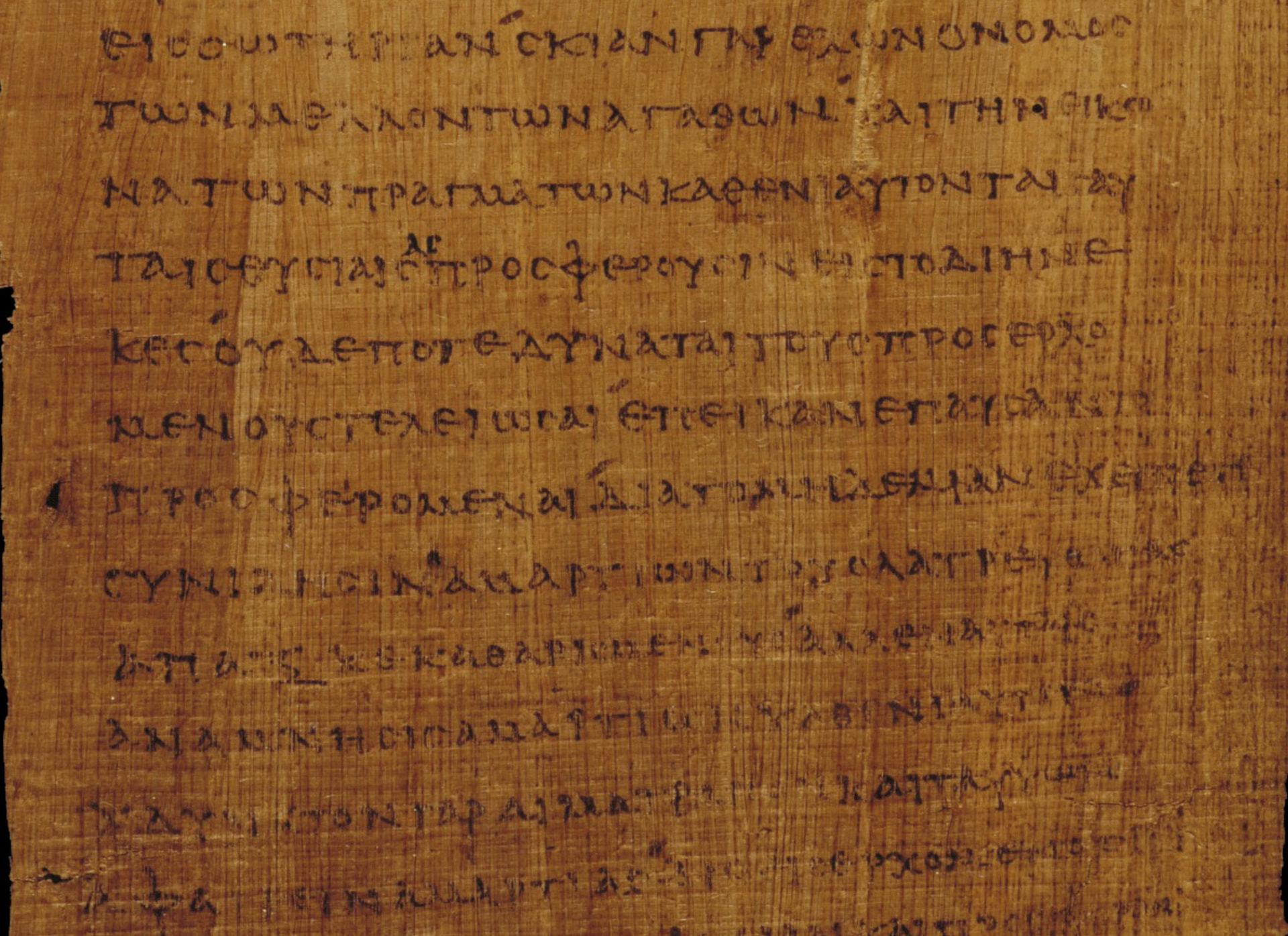
Mitch, I see there’s a papyrus of “about 200”—P46—that reportedly has δύναται. That must be the earliest testimony. I guess earlier editions went with δύνανται (Sinaiticus etc.) by default. But I haven’t really looked into it.
Yes I saw P46 in the apparatus, very strange…but lots of odd things in different GNT manuscripts.
I can’t get my head around your comment about ἐπεὶ οὐκ ἂν ἐπαύσαντο being a statement not a question. I took it as a question because the sentence ends with “;” but punctuation of course is a late addition to the GNT. But if it’s a counterfactual statement not a counterfactual question, how might verse 2 translate in that case? “For such offerings would not cease for the reason that that those ministering them, having been definitively cleansed, would no longer have consciousness of sin” doesn’t make sense to me…
Yes it’s the context—but nothing else—that shows it should be read as a rhetorical question. Sorry if my comment misled you.
οὐκ ἂν ἐπαύσαντο προσφερόμεναι “they wouldn’t have stopped being offered” (or here of course “wouldn’t they have …?").
Since English “can” can be either singular or plural, it’s the Greek that shows up the ungrammaticality of δυνανται. If that’s to be understood at all it has to be referred to the θυσιαι, the sacrificial offerings (which clearly is the subject of οὐκ ἂν ἐπαύσαντο προσφερόμεναι). But that’s extremely awkward in itself, and it leaves the opening phrase with ὁ νόμος hanging in midair. Surely the Hebrews author isn’t normally that incoherent? I thought his Greek was held to be good. Far better just to accept δυναται, now known to be much the oldest witness to the text.
Incidentally, a few years back the Oxy.Papyri published some Acts papyri with readings that invite (or rather compel) radical reappraisal of the transmission. In particular in vol.74 (which I no longer have because I threw it away).
Yes when I read this again a short while ago I thought it strangethat ὁ νόμος seems to be introduced as the subject but is then left hanging. My guess is that the author is saying that the Law of Moses can’t make anyone perfect (sinless) because it decrees sacrifices repeated each year, which as the next verse 3 says gives constant reminder of sin etc.
It’s rhetoric. Certainly not incoherent, and maybe “tricky” would be a better word than “awkward.” The mental shift is something like ὁ νόμος τῶν θυσιῶν to αἱ θυσίαι τοῦ νόμου. It allows him to make the expansive statement about ὁ νόμος at the beginning and then justify it with an argument about the particular. The readers are not left any more confused than he intends.
Oxy.Papyri vol. 74 is available in the Book Collection link if you scroll down to the “Expand” toggle.
It appears Joel is championing δυνανται over δυναται, though he doesn’t actually say. I think that’s probably mistaken. Certainly with δυναται there’s no incoherence.
I didn’t mean to be cryptic. I would argue for δύνανται.
Internally, verses 9:9 and 10:11 both use δύνανται to make the same statement about the sacrifices removing sin. In 10:4 nearly the same statement is made about blood of the sacrifices being unable to remove sin.
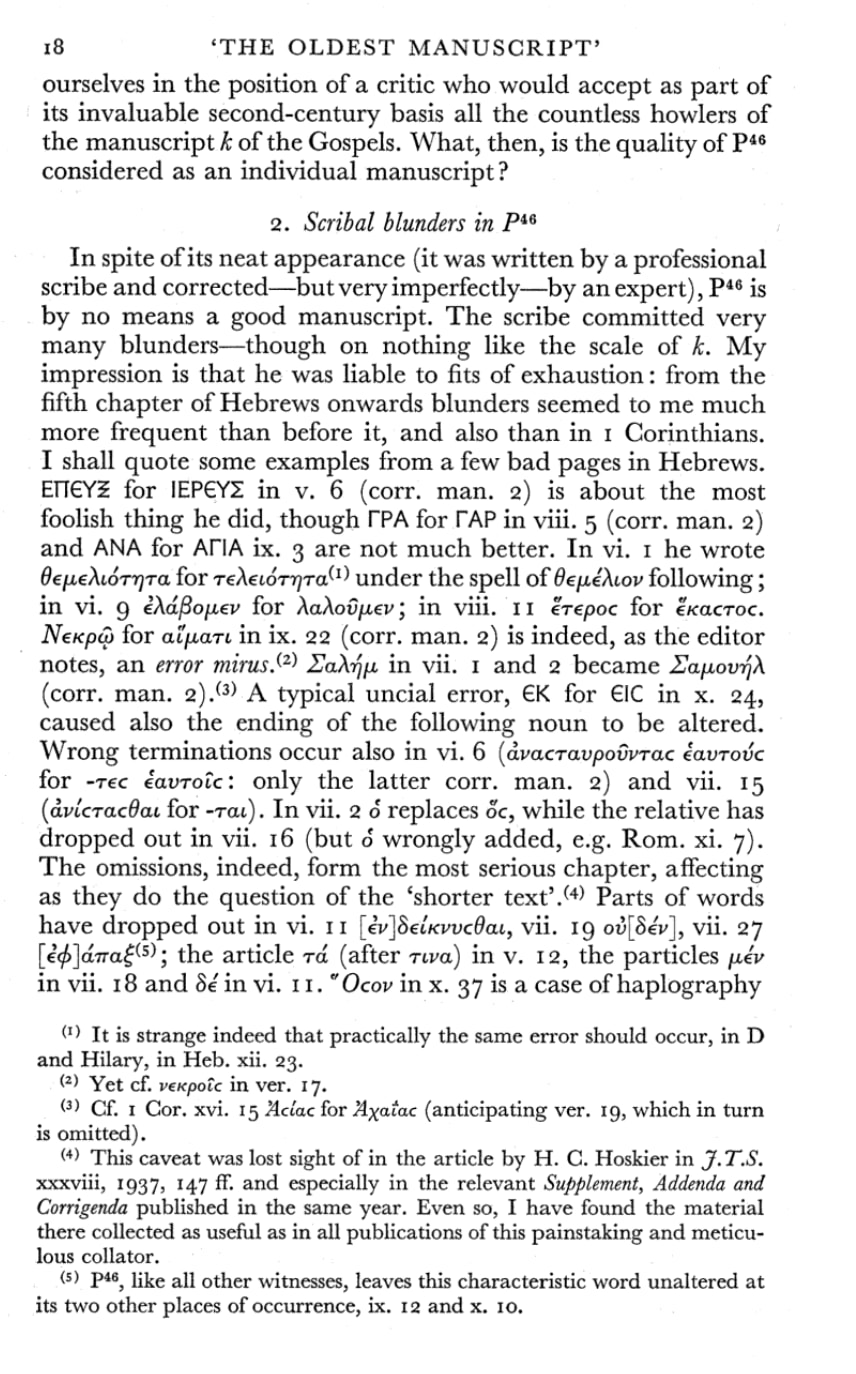
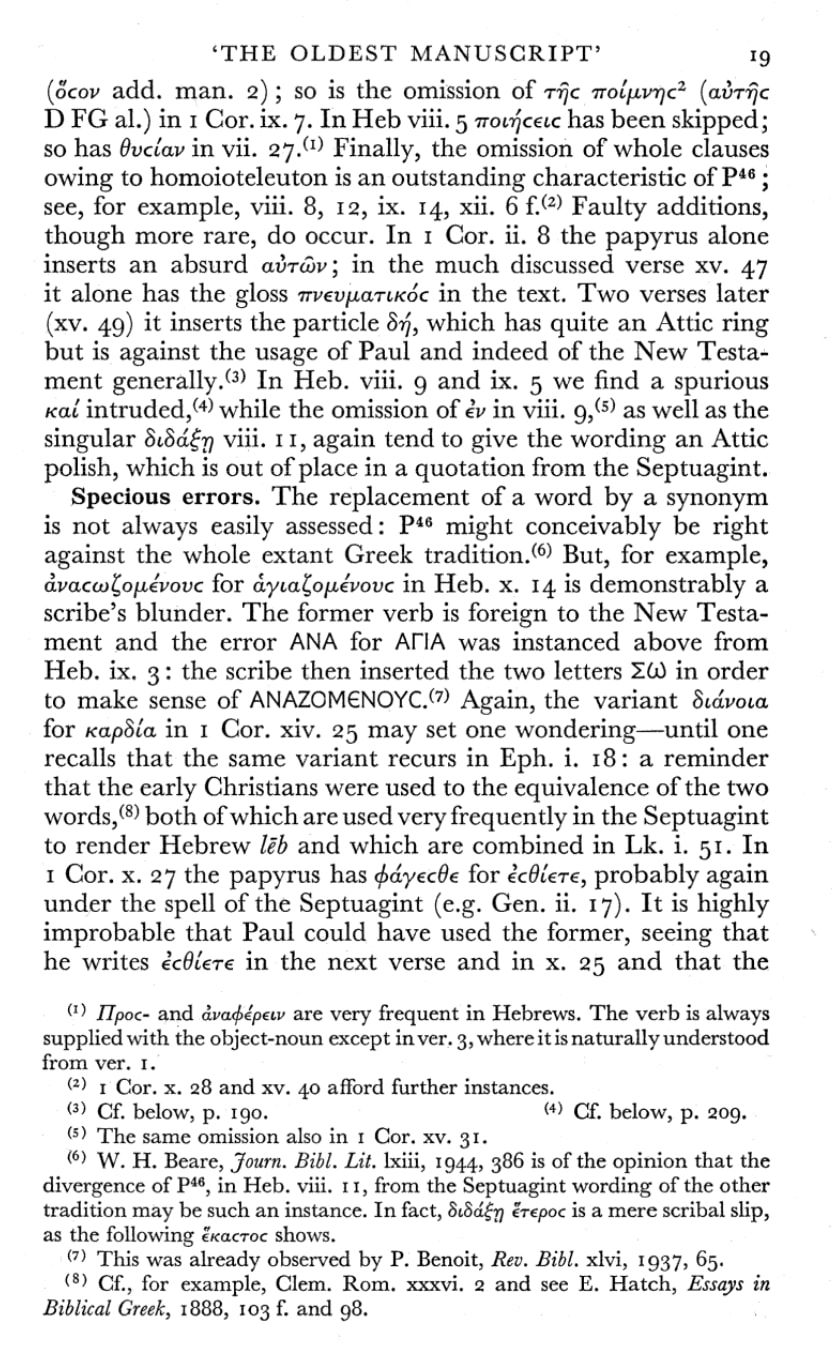
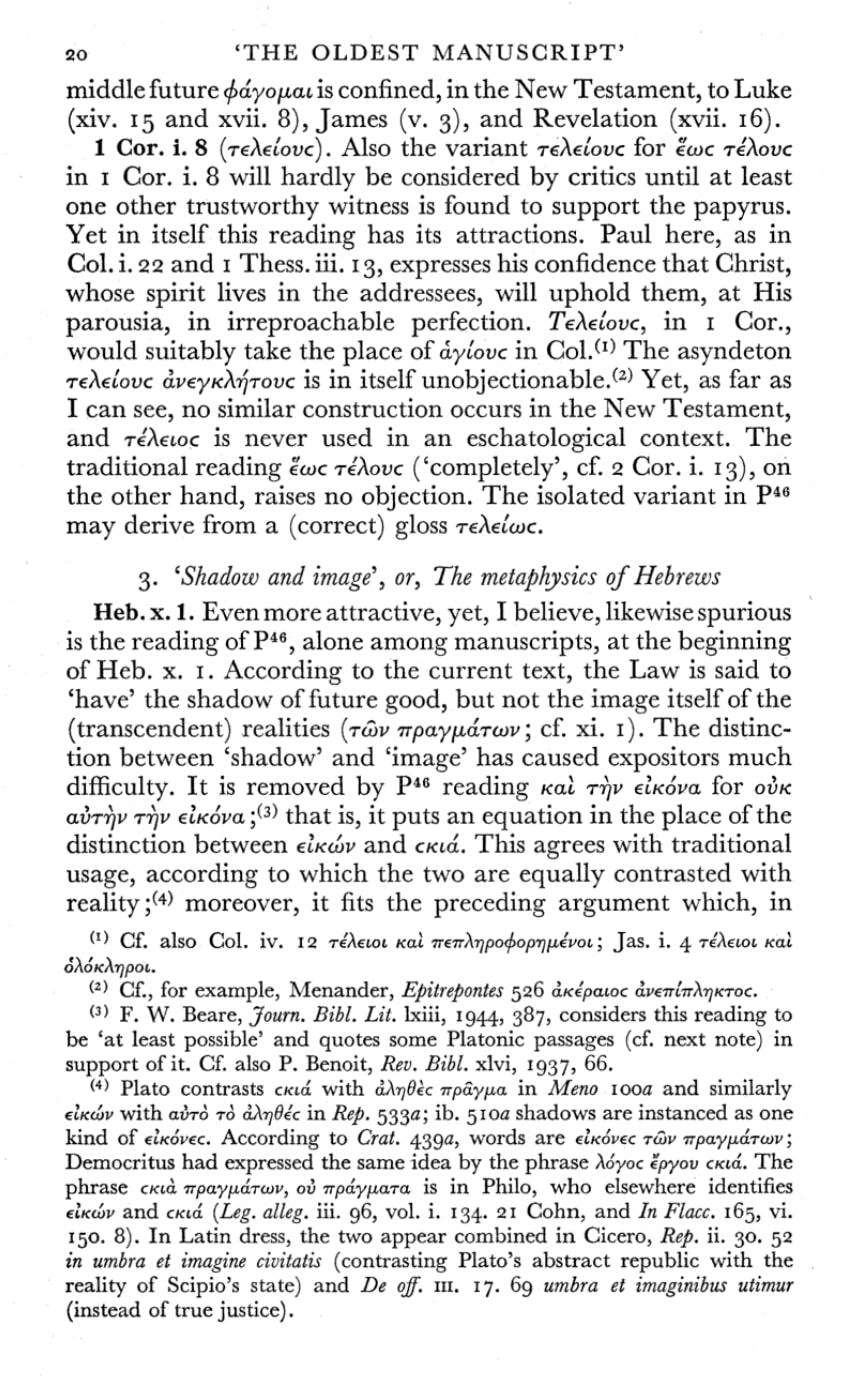
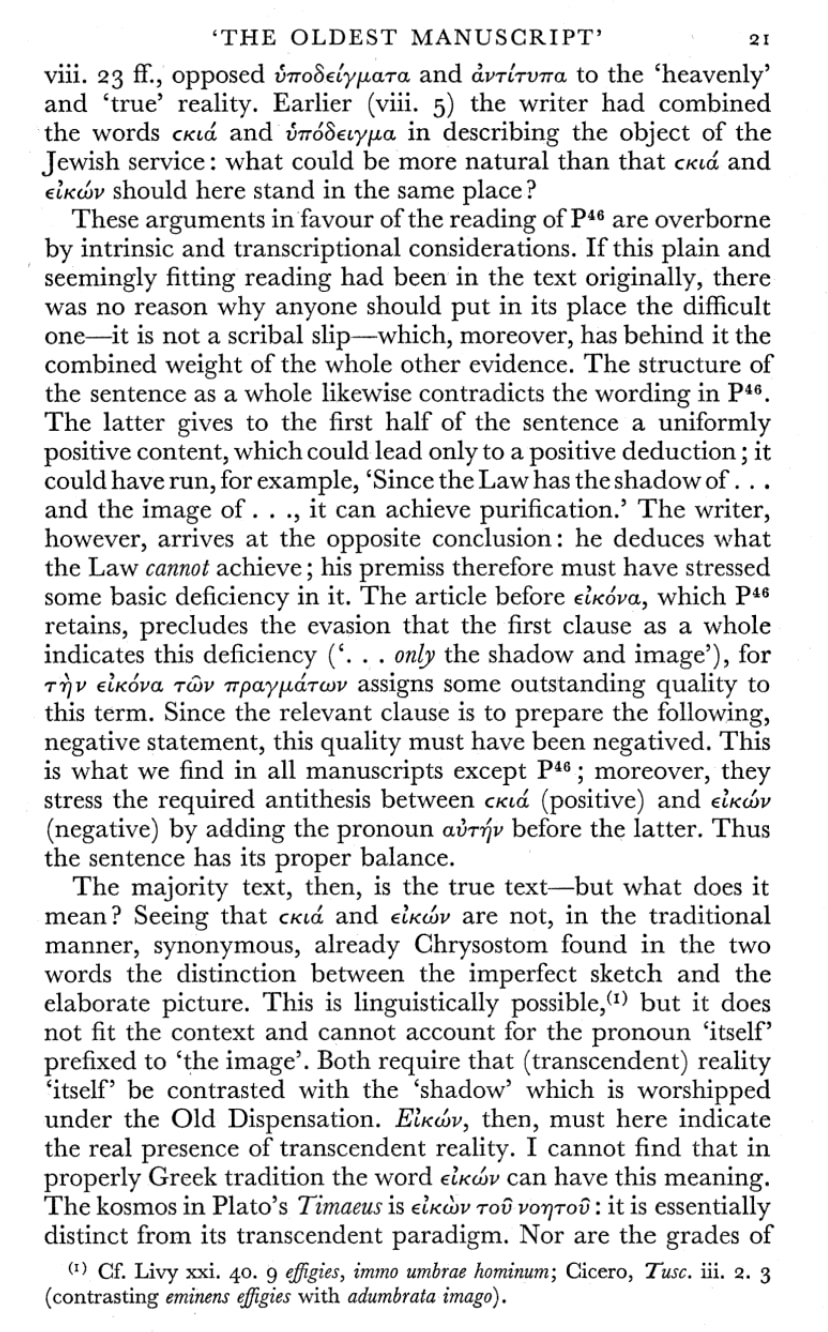
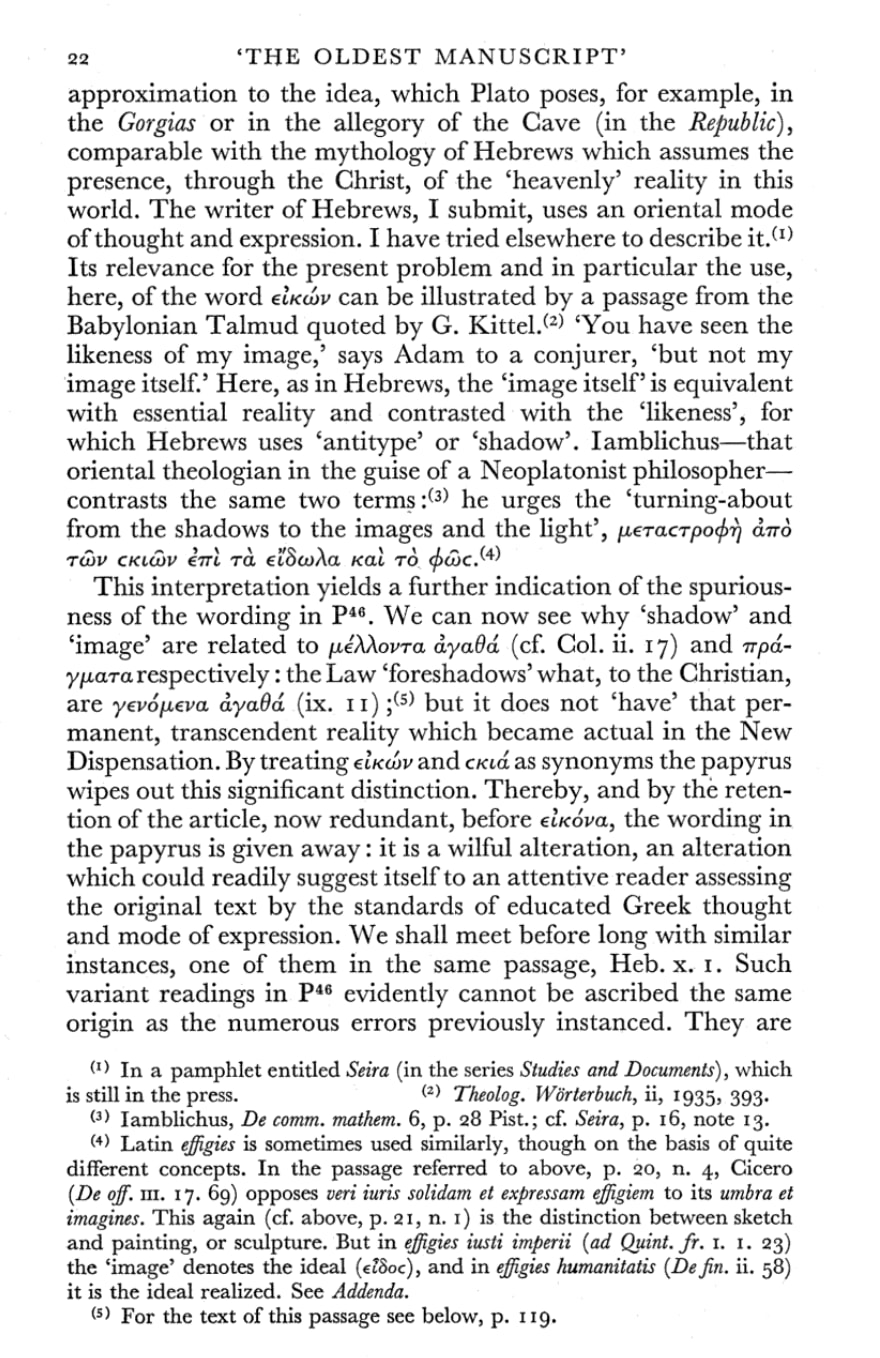
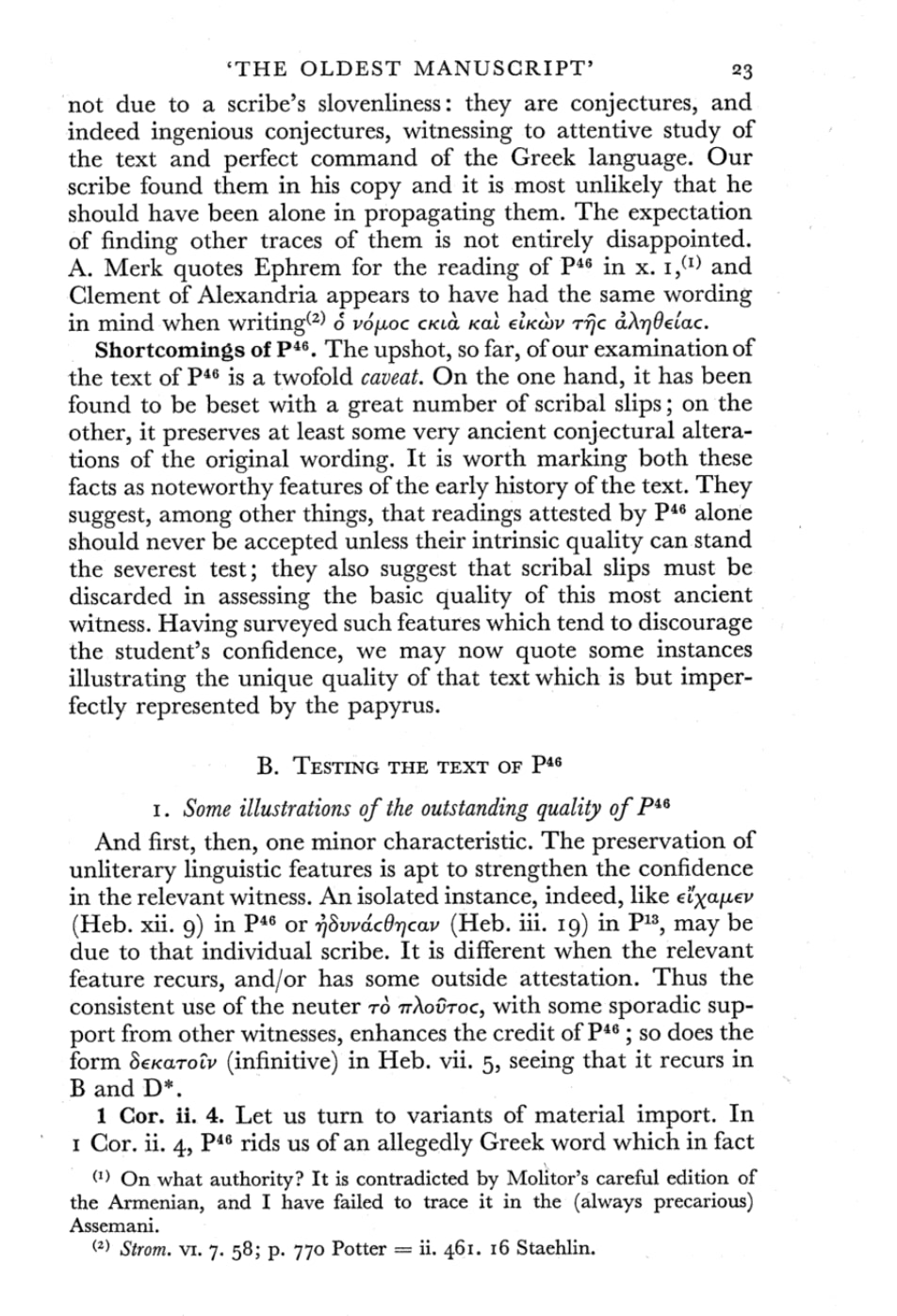
𝔓⁴⁶, mentioned above as the oldest witness, has a lot of things going in these verses that make it seem not totally reliable.
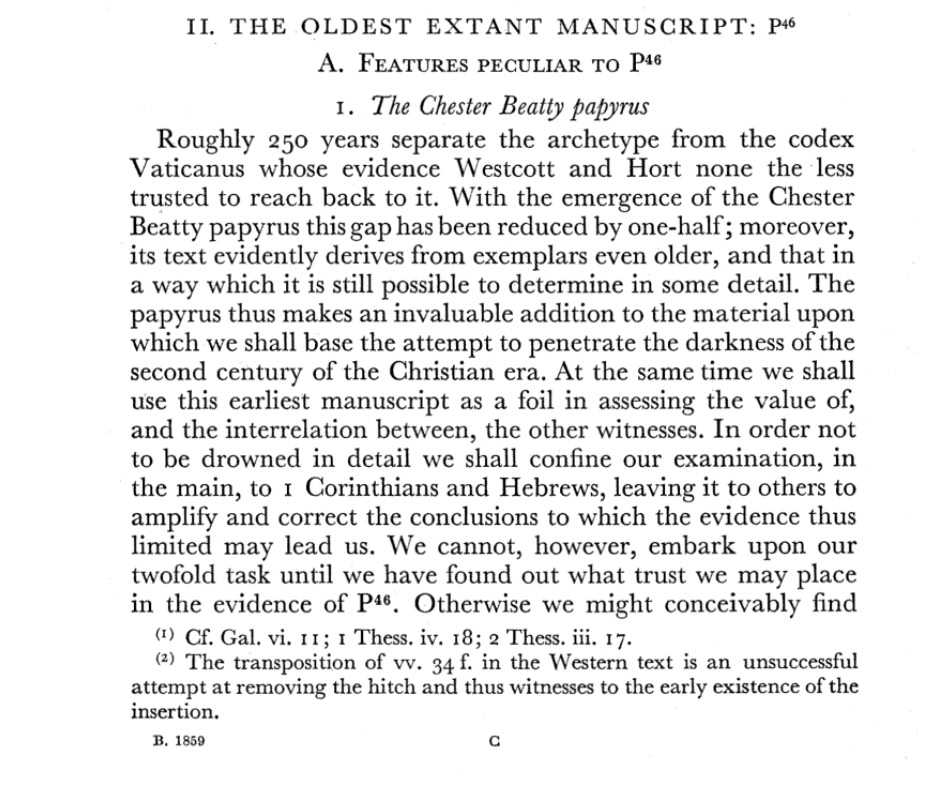
All the divergences in this short section made me interested in what people have had to say about this papyrus generally. Here is Zuntz. See especially the last pages about this section and his general statement about “ingenious conjectures”.
As I suspected, Joel does champion δυνανται over δυναται, and he’s apparently willing to accept the blatantly ungrammatical text that it entails. For my part I’d be very reluctant to do so.
I think it most unlikely that the Hebrews author would have perpetrated such a solecism. I can’t believe that Zuntz would countenance it (I haven’t seen the latter part of his article and don’t know if he had anything to say about δυναται vs. δυνανται); the same goes for any other biblical scholar worth his salt. The most recent NT text that I have is the UBS 1983 revised edition, which prints δυναται. I’d agree with that.
I may have more trouble than the UBS 1983 editors with taking 𝔓⁴⁶ as authority here, when it contains an incorrect (but grammatically defensible) conjecture like κἂν in the next verse, and δύναται never made it into the main tradition. This δύναται fix, absent the 𝔓⁴⁶ support, becomes contextually difficult.
I’d prefer this correction if we have to do something about the grammar.
Well Joel an incorrect reading in one place doesn’t invalidate a correct one in another, and we can’t assume that all correct readings made it into the main tradition. These are both elementary points.
I’m glad to learn that Westcott upheld δύναται before the papyrus came to light. It did seem the obvious way to mend the incoherence of δύνανται, as you can see from my first post here when I only had what Mitch posted to go by.